Introduction: A Vision Beyond Cell Towers
When Elon Musk speaks, industries pay attention. From electric cars to reusable rockets, he has a record of making what once seemed impossible suddenly inevitable. His latest declaration, however, stretches the boundaries of telecommunications: within two years, Musk claims, smartphones will no longer depend on cell towers but instead function like “satellite walkie-talkies.”
The bold idea reimagines mobile communication, potentially transforming billions of devices worldwide. But is it realistic? And what will it mean for consumers, telecom giants, and governments when the world’s richest innovator tries to put satellites directly in everyone’s pocket?
Musk’s Track Record: From Cars to Space to Phones
Skeptics often dismiss Musk’s promises as wild exaggerations, yet his track record complicates such dismissals.
- In 2008, when Tesla was on the verge of collapse, few believed electric cars could compete with gasoline vehicles. By 2020, Tesla was the world’s most valuable automaker.
- In 2010, SpaceX was mocked for failing rocket launches. Today, it dominates the commercial launch industry, flying astronauts to the International Space Station.
- In 2022, Musk shocked regulators and competitors by buying Twitter (now X) and reshaping it into a subscription-heavy platform.
The idea of turning phones into satellite-connected devices may sound futuristic, but so did sending rockets to Mars or creating self-driving cars.
The Technology Behind the Dream
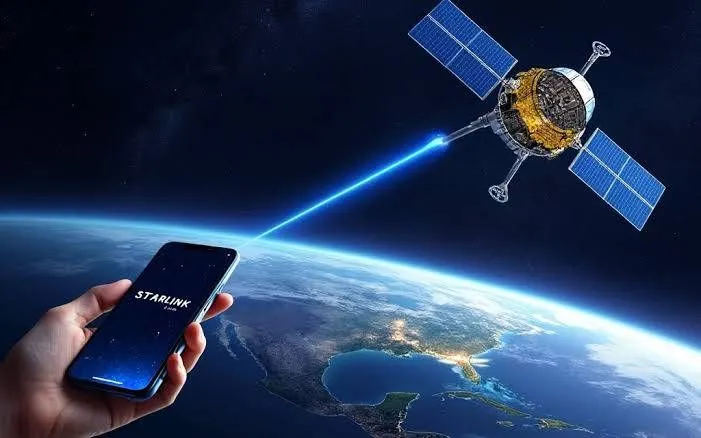
So how could Musk make smartphones behave like satellite walkie-talkies? The answer lies in Starlink, SpaceX’s growing constellation of low-Earth orbit (LEO) satellites.
Unlike traditional telecom satellites that orbit thousands of miles above Earth, Starlink operates closer — about 340 miles up — reducing latency and making real-time communication possible.
In 2023, SpaceX announced a partnership with T-Mobile in the U.S., promising to connect phones directly to satellites using existing spectrum bands. Instead of requiring bulky satellite phones, ordinary smartphones would be able to send texts and make calls, even in remote areas.
If Musk succeeds, the system would effectively bypass cell towers, turning every smartphone into a global walkie-talkie that works anywhere with a view of the sky.
Why Two Years? The Timeline Question
Musk insists that within two years the technology will be functional at scale. That timeline raises eyebrows.
- Hardware barriers: Most smartphones are not yet optimized for satellite communication. While Apple has introduced emergency satellite texting in its latest iPhones, full voice and data integration requires new chips and antennas.
- Regulatory barriers: Spectrum allocation is tightly controlled by governments. Musk’s partnerships with telecom carriers like T-Mobile are a workaround, but expanding globally will require negotiating dozens of national regulators.
- Financial barriers: Launching and maintaining thousands of satellites costs tens of billions. While SpaceX’s reusable rockets reduce costs, scaling fast enough to cover the globe remains daunting.
Still, Musk thrives on aggressive timelines. His two-year target may be optimistic, but it creates pressure that often accelerates innovation.
Impact on Consumers: From Remote Villages to Disaster Zones
If achieved, Musk’s vision would radically change how and where humans communicate.
- Eliminating Dead Zones: No more dropped calls on highways, no more “no service” warnings on mountaintops or in deserts.
- Disaster Recovery: After earthquakes, hurricanes, or wars, when cell towers collapse, satellite connectivity could keep survivors and rescuers connected.
- Developing Nations: Millions in rural Africa, Asia, and South America live without reliable coverage. Satellite phones could leapfrog traditional telecom infrastructure, connecting the unconnected.
- Travel and Exploration: Adventurers, sailors, and pilots could rely on ordinary phones for global communication without expensive satellite equipment.
For ordinary users, this means a future where smartphones truly work everywhere.
The Telecom Industry’s Fear: Disruption on a Massive Scale
For telecom companies, Musk’s vision is both opportunity and existential threat.
- Opportunity: Partnering with SpaceX could expand coverage and attract customers in underserved areas.
- Threat: If Starlink bypasses towers entirely, it could reduce the role of traditional carriers, cutting into billions in infrastructure investments.
Analysts predict some carriers may resist Musk, fearing disintermediation. Others may rush to strike deals, betting that resisting a trillion-dollar empire is futile.
Governments and Geopolitics: Who Controls the Sky?
Another challenge lies in geopolitics. Communication infrastructure is not just about business — it is about sovereignty and control.
- Countries like China and Russia may resist Starlink penetration, fearing foreign surveillance or loss of control.
- Authoritarian regimes could view satellite-connected phones as dangerous, allowing dissidents to communicate beyond censorship.
- Democratic governments, meanwhile, may welcome Musk’s technology for disaster resilience but will still demand regulatory oversight.
Musk’s global influence — already controversial with Starlink’s role in Ukraine — could expand further if he controls the backbone of global mobile communication.
Technical Hurdles: Walkie-Talkies or Wi-Fi Everywhere?
Some engineers argue that Musk’s metaphor of “satellite walkie-talkies” oversimplifies the challenge.
- Bandwidth limits: Satellites cannot handle the same volume of traffic as cell towers. Full-scale streaming or gaming may be limited.
- Battery drain: Direct satellite communication requires more power, potentially shortening smartphone battery life.
- Weather and obstruction: Dense urban areas or heavy storms could disrupt connections.
Realistically, the first rollout may look more like basic text and emergency calling rather than full 5G-like performance. But even that would be revolutionary.
Musk’s Motivation: Legacy and Power
Why does Musk care so much about turning phones into satellite devices? Beyond profit, the move fits his larger mission.
- Democratizing Connectivity: Musk has long said his goal is to “connect every human on Earth.”
- Synergy with SpaceX: More Starlink users mean more revenue, funding Mars missions.
- Control of Communication: By owning both the infrastructure (satellites) and platform (X/Twitter), Musk could become one of the most powerful communication gatekeepers in history.
In other words, this is not just about fixing dead zones — it’s about cementing Musk’s role as the architect of global connectivity.
Public Reaction: Excitement vs. Skepticism
Fans are thrilled. Social media buzz paints Musk as once again promising to change the world. Enthusiasts imagine a future where lost hikers text from mountaintops or farmers in remote fields join global markets.
Skeptics, however, warn that Musk often overpromises. They point to the delayed Cybertruck, unfinished Hyperloop projects, and missed Tesla deadlines as cautionary tales. Will “satellite walkie-talkies” be another overhyped promise?
The Business Model: Who Pays for the Sky?
Pricing will also determine success.
- Will satellite connectivity be free, included in existing plans, or charged as a premium service?
- If telecom carriers partner with Musk, will costs rise for consumers?
- Could free basic coverage disrupt the economics of mobile plans, forcing carriers to rethink their models?
Some predict Musk could bundle connectivity with X Premium or Tesla products, creating a powerful ecosystem spanning cars, phones, satellites, and social media.
Conclusion: The Next Great Leap?
Elon Musk’s plan to make phones work like satellite walkie-talkies within two years sounds like science fiction. Yet so did reusable rockets, mass-market EVs, and tunneling hyperloops.
If successful, the project would redefine mobile communication, ending dead zones, empowering disaster zones, and connecting billions. But the road ahead is filled with technical, regulatory, and political obstacles.
One thing is certain: when Musk sets a deadline, the world pays attention — even if it takes longer than promised. And if in two years, you find yourself calling a friend from the middle of the Sahara Desert with nothing but your phone, you’ll know that once again, Musk turned bold talk into reality.