“In general, I want all humans to be happy and prosperous, without regard to race, creed, religion or anything else.”
— Elon Musk
In an era defined by polarization, competition, and accelerating technological change, Elon Musk’s statement stands out for its simplicity. It is not framed as policy, ideology, or strategy. At its core, it is a human declaration — one that cuts through the noise to remind us what progress is supposed to mean.
This is not a political statement. It is a moral one.
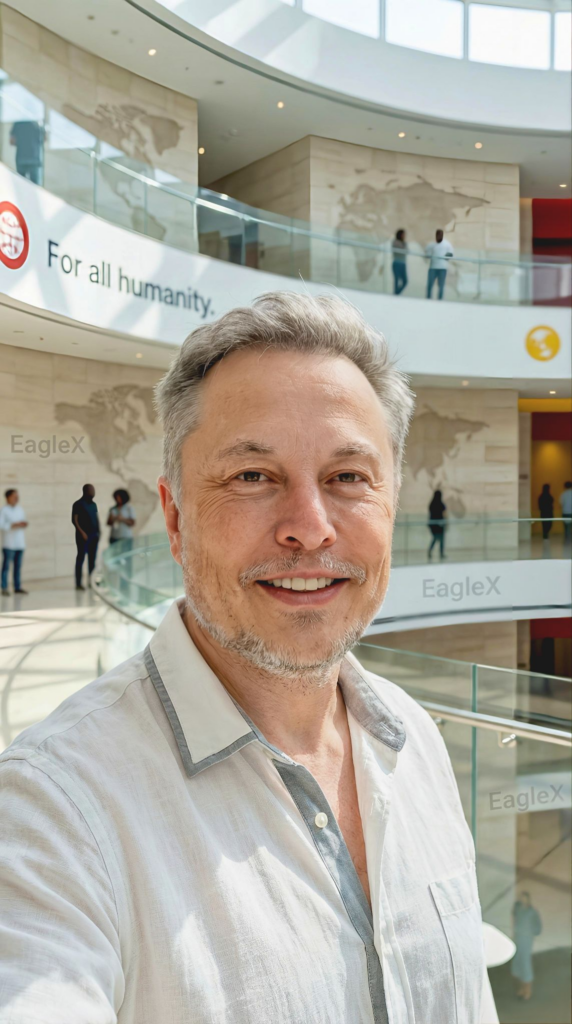
Progress Loses Meaning When It Leaves People Behind
Humanity is advancing at an unprecedented pace. Artificial intelligence, space exploration, renewable energy, and automation are reshaping economies and societies faster than ever before. Yet the benefits of this progress are not evenly shared.
When innovation enriches only a small fraction of society while widening inequality for the rest, it ceases to be true progress. Technology, growth, and disruption lose their purpose when they forget the people they are meant to serve.
A future worth building cannot be one where opportunity is exclusive and dignity is conditional. True advancement is measured not by how fast we move forward, but by how many people move forward together.
Redefining Success Through a Human Lens
Musk’s words implicitly challenge the way success is traditionally measured. For decades, development has been evaluated through metrics such as GDP growth, market capitalization, or technological milestones. But these indicators tell only part of the story.
What if human happiness, shared prosperity, and universal dignity were treated as core benchmarks of success?
If we genuinely believed that all humans deserve to thrive, the design of our systems would look different:
- Technology would be built not only for efficiency, but for inclusion.
- Economic growth would prioritize resilience and fairness, not just scale.
- Innovation would be guided by long-term human impact, not short-term gain.
In this vision, progress is not abandoned — it is refined. It becomes more intentional, more ethical, and more aligned with the needs of society as a whole.
The Question That Redefines the Future
“If we truly believed this, how differently would we design our world?”
This question extends far beyond Silicon Valley or government offices. It applies to businesses deciding how they grow, engineers deciding what they build, and individuals deciding what they value.
The future does not arrive on its own. It is shaped by collective choices, priorities, and beliefs. And perhaps the most meaningful measure of that future will be a simple one: does it make people happier, more secure, and more dignified — without exception?
If progress cannot answer that question, then it is worth asking whether we are moving forward at all.