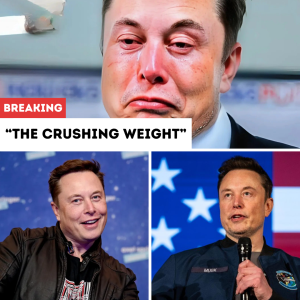
Imagine opening your mailbox and finding a check for $5,000 — not a stimulus check, not a tax refund, but a direct payout from government savings.
That’s the futuristic pitch now dominating headlines after Elon Musk and the freshly formed Department of Government Efficiency — yes, “DOGE” — unveiled a radical idea:
Cut government waste → Send 20% of the savings straight to American taxpayers.
It’s bold.
It’s flashy.
It’s pure Musk.
And at a high-profile summit in Miami, former President Donald Trump poured gasoline on the fire when he confirmed the idea was
“actively being considered.”
“If we cut waste, if we streamline spending, Americans should benefit directly. Give 20% of the savings back to the people. Why not?” Trump told the crowd.
Instantly, the internet erupted.

“Free $5,000?!”
“When does this start?”
“Is this real or another headline grab?”
But behind the excitement, analysts are urging caution — because the $5,000 promise rests on
one enormous, very shaky assumption.
Where Did the $5,000 Come From? A Wild Estimate
The number didn’t come from Congress.
It didn’t come from the budget office.
It didn’t even come from a formal analysis.
It came from an illustrative scenario floated by Musk’s DOGE team:
If the government could somehow slash $2 trillion in inefficiency, fraud, and overlapping programs…
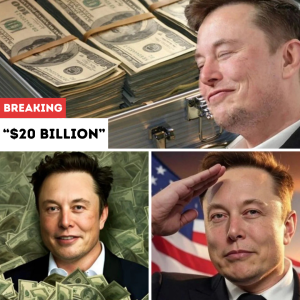
Then 20% of that — $400 billion — split across 80 million eligible taxpayers → roughly
$5,000 per person.Mathematically, it checks out.
Politically and practically?
That’s where things get messy.
Because the $2 trillion figure is:
- not verified
- not agreed upon by economists
- not currently achievable without extreme and unrealistic cuts
- and far beyond anything any administration has ever saved
Even aggressive bipartisan estimates typically place realistic possible savings in the $200–400 billion range — over 10 years.
Not $2 trillion.
And certainly not annually.
Musk’s Logic: “Make Efficiency Rewarding”
Elon Musk, now acting as the figurehead of DOGE, argues that Washington has no incentive to be efficient. Bureaucracies spend their entire budgets — or risk losing funding.
“If people directly benefit from cutting waste,” Musk said, “they’ll demand efficiency. We need a system where saving money pays.”
He compared it to the Tesla factory model:
Set a target → identify waste → reward efficiency with bonuses → repeat.
In Musk’s view, giving Americans a financial stake in federal efficiency could:
- reduce runaway spending
- boost public engagement
- pressure agencies to trim fat
- restore trust in government operations
It’s a provocative blend of populism and technocratic reform.
But is it possible?
Economists Weigh In: “Fun idea — nearly impossible reality”
Policy experts from across the political spectrum agree on one thing:

The rebate is theoretically appealing… but practically near-impossible.
Here’s why:
1. Government “waste” is often misdefined
A large portion of what the public calls “waste” is legally mandated spending:
- veterans’ benefits
- Medicare reimbursements
- defense contracts
- infrastructure maintenance
Cutting it ≠ waste reduction.
It simply means cutting services or benefits.
2. The biggest inefficiencies are political, not administrative
Duplicated agencies, overlapping jurisdictions, and redundant programs are structural problems — requiring Congress to eliminate or merge them.
That almost never happens.
Not because it’s impossible…
but because it’s politically unpopular.
3. You can’t rebate savings that don’t exist
Even ambitious waste-cutting initiatives rarely generate more than a few billion in real, confirmed savings annually.
At current trends, the likely taxpayer rebate looks more like:
$25–$200 per person, not $5,000.
4. The moment cuts affect jobs or services, support collapses
Cutting “waste” often translates to:
- layoffs
- program closures
- contract terminations
- reduced local funding
Political blowback tends to kill reforms before they scale.
Trump’s Role: Enthusiastic, but Noncommittal
At the Miami summit, Trump leaned heavily into the idea — calling it “innovative,” “exciting,” and “worth exploring.”
But he stopped short of promising anything.
Those watching closely noticed his phrasing:
“We’re looking at it.”
“Definitely interesting.”
“Could be big.”
“The people should benefit.”
Not one definitive commitment.
This suggests Trump sees the rebate as:
- a high-impact talking point
- a political crowd-pleaser
- a potential campaign theme
- and a low-risk concept, since nothing is guaranteed
His approach mirrors the “Space Force” rollout — bold idea → media hype → eventual implementation, but scaled back and slower than advertised.
Whether the DOGE rebate follows that same path remains to be seen.
Public Reaction: “I’ll believe it when the check arrives”
Online, public sentiment is split:
Hopeful:
“Finally someone wants to reward taxpayers instead of punishing us.”
Skeptical:
“So we’re supposed to believe the government will return money?”
Cynical:
“This sounds like political sugar before an election.”
Eager:
“Show me where to sign up.”
The excitement is real — Americans are hungry for relief — but so is the doubt.
So… Will You Actually Get $5,000?
Here’s the honest bottom line:
A $5,000 rebate is extremely unlikely.
At least in the near future.
But…
A smaller efficiency bonus is possible.
If DOGE successfully trims waste in measurable, verifiable ways, experts say a national “efficiency dividend” could become a real policy — just far smaller than the viral $5,000 figure.
Think:
- $100
- $250
- maybe $500 in a strong year
Symbolic, but meaningful.
And most importantly:
Politically achievable.
The Big Picture
Regardless of the payout size, Musk’s idea has already succeeded in one way:
It has forced the country to ask a rare question:
Should taxpayers directly benefit when the government cuts waste?
If the debate spreads, and pressure builds, DOGE may spark reforms that outlast the headlines.
But for now?
The $5,000 dream is just that — a dream.
The policy is possible.
The payout is uncertain.
And Washington’s track record suggests the hype may outrun reality.
The Remarkable Life of Sir John Anthony Quayle
Sir John Anthony Quayle’s name is remembered in many circles—as a distinguished British actor, a gifted theatre director, a novelist, and a knight of the realm. Yet before his fame on stage and screen, Quayle’s life was marked by the crucible of World War II, where he served with courage and distinction. His story is one of artistry forged by hardship, and of a man who carried the weight of war into the depths of his creative work.
Born on September 7, 1913, in Ainsdale, Southport, Lancashire, Quayle entered adulthood just as Europe was sliding into chaos. By 1939, with war declared, he joined the Royal Artillery. His path soon took him into the shadowy world of intelligence, working with Auxiliary Units in Northumberland, Britain’s secret underground force trained to resist invasion. The young officer’s keen mind and adaptability quickly stood out, and he was transferred to the Special Operations Executive (SOE).
It was in the SOE, Britain’s covert organization tasked with espionage, sabotage, and supporting resistance movements, that Quayle faced his most harrowing experiences. He operated in Albania, a rugged land wracked by occupation and guerilla warfare. The dangers were immense—hostile terrain, brutal reprisals, and the constant threat of betrayal. For Quayle, these missions left indelible marks not only on his memory but also on his art.
After the war, he turned those experiences into words. His first novel, Eight Hours from England (1945), reads like a memoir, its authenticity rooted in the realities he had lived. The book stands as a vivid reminder that his service was not just a footnote to an acting career, but a defining chapter of his life. Two years later, he published On Such a Night (1947), again weaving war and humanity into prose that resonated with those who had endured the same darkness.
Quayle’s life after the war blossomed in other directions. On stage and in film, he became a commanding presence, acclaimed for his performances in both classical and contemporary roles. His directorial work added another layer to his legacy, shaping the craft of theatre as well as embodying it. In time, he became a household name, balancing the poise of an artist with the gravity of a man who had once fought in the shadows.
His personal life brought both change and stability. He was first married to actress Hermione Hannen, a union that ended in divorce. In 1947, he married American actress Dorothy Hyson, with whom he raised three children. His devotion to family life paralleled his artistic and military accomplishments, grounding him amid a career that spanned continents and decades.
Quayle also embraced teaching. In the mid-1970s, he served as artist-in-residence at the University of Tennessee, guiding students at the Clarence Brown Theatre. There, young actors found not only a mentor in craft but also a man whose life embodied resilience, creativity, and integrity.
On October 20, 1989, Sir John Anthony Quayle died of cancer in London at the age of 76. His passing marked the end of a life lived across extraordinary landscapes—war-torn Europe, the stages of Britain and America, and the pages of novels that bore the weight of truth.
His knighthood was recognition not just of his artistry but of his service to culture and country. Yet perhaps the most striking aspect of Quayle’s life is the way his wartime courage and creative brilliance intertwined. The officer who risked his life in Albania became the artist who gave voice to war’s complexities.
Today, Quayle is remembered as more than an actor. He was a soldier, a writer, and a man whose life reflected the best of both courage and creativity. His story is a reminder that the heroes of World War II were not only found on the battlefield, but also among those who carried its lessons into the arts, ensuring that future generations would understand both the darkness and the resilience of the human spirit.
Lest we forget Sir John Anthony Quayle—soldier, storyteller, and servant of truth.