In a groundbreaking revelation, Elon Musk has once again shaken the tech world by hinting at Tesla’s latest futuristic endeavor—an army of talking robots designed to completely replace office workers and revolutionize the labor market. This bold statement has ignited debates on the future of work, automation, and artificial intelligence, leaving many wondering: Will Tesla’s humanoid robots truly reshape the global workforce?
Tesla’s Vision for AI-Powered Talking Robots
Tesla has long been at the forefront of technological advancements, pushing the boundaries of artificial intelligence (AI), robotics, and autonomous systems. However, Musk’s latest revelation suggests a major leap forward. According to insiders, Tesla is actively developing a fleet of AI-powered humanoid robots, capable of handling complex office tasks, communicating seamlessly with humans, and even making decisions in real time.
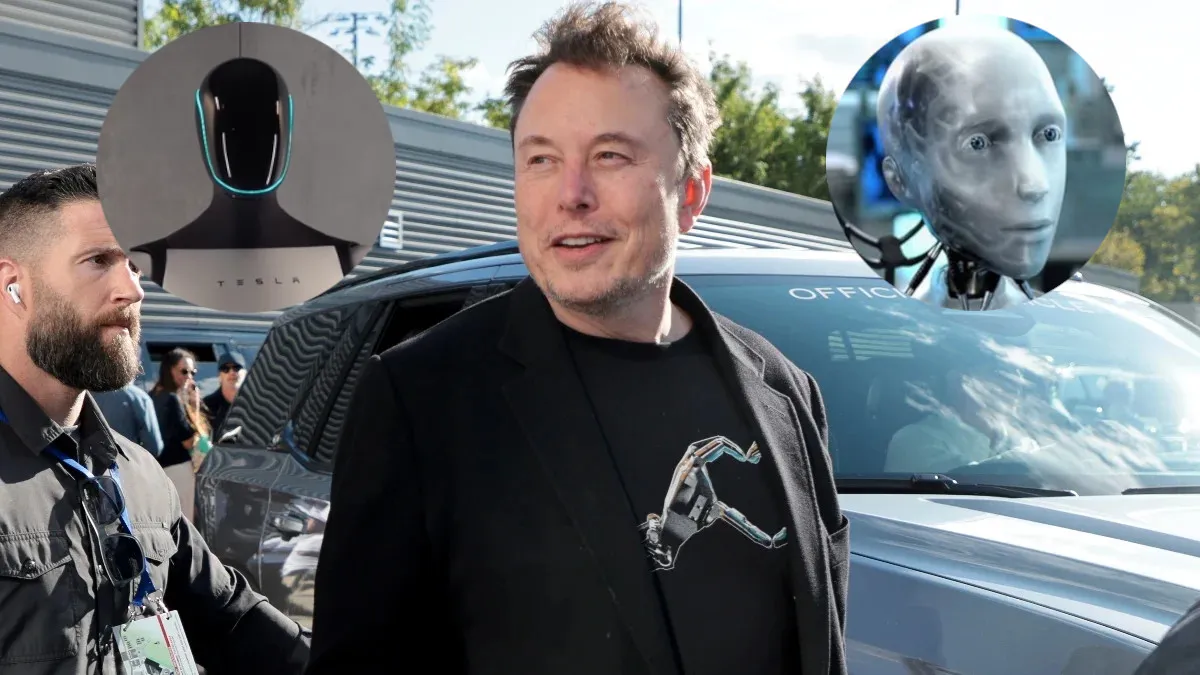
These advanced robots, which are rumored to be a more sophisticated extension of the existing Tesla Optimus project, aim to streamline office operations and boost productivity. With machine learning capabilities and natural language processing (NLP), these robots could replace traditional human employees in various sectors, from administrative roles to customer service and even managerial positions.
“Tesla’s robots will not just perform mechanical tasks but will engage in intelligent conversations, solve problems, and enhance business efficiency,” Musk stated in a recent interview.

How Tesla’s Talking Robots Will Change the Workforce
The potential impact of Tesla’s talking robots on the labor market is immense. Companies could benefit from lower overhead costs, increased efficiency, and round-the-clock operations. These robots would eliminate human errors, streamline workflows, and provide businesses with a cost-effective alternative to human employees.
1. Replacing Traditional Office Roles
One of the most disruptive aspects of Tesla’s AI workforce is its ability to replace traditional office roles. Receptionists, customer support representatives, HR personnel, and even data analysts could soon find themselves competing against robots that work tirelessly, never ask for a raise, and don’t require benefits.
2. Reshaping Corporate Structures
With Tesla’s robots managing administrative and decision-making tasks, companies may require fewer human employees. This shift could lead to leaner corporate structures, where AI-driven robots take on middle-management duties, while a select few human executives oversee strategic operations.
3. Impact on Global Employment
If implemented on a large scale, Tesla’s talking robots could lead to mass displacement of human workers, sparking concerns over unemployment rates and income inequality. While some experts argue that AI will create new job opportunities, others warn of a potential crisis in the job market as automation outpaces job creation.
“We must be prepared for the massive changes that automation and AI will bring to our workforce,” warns a leading economist.
The Technology Behind Tesla’s Talking Robots
Tesla’s talking robots are expected to integrate cutting-edge AI technologies, including:
- Natural Language Processing (NLP): Enabling robots to understand and respond to human speech with high accuracy.
- Machine Learning: Allowing robots to adapt, learn from experience, and improve their decision-making abilities over time.
- Autonomous Mobility: Utilizing Tesla’s advancements in self-driving technology to enable robots to navigate office spaces effortlessly.
- Human-Mimicking Algorithms: Creating realistic interactions by simulating human-like conversations, emotions, and behaviors.
Musk’s vision aligns with Tesla’s existing AI capabilities, which have already revolutionized the automotive industry. The company’s AI-driven Full Self-Driving (FSD) software serves as a foundation for the cognitive and autonomous functions that these robots will likely possess.
Challenges and Ethical Concerns
While Tesla’s innovation is undeniably impressive, it also raises a host of challenges and ethical concerns that society must address before fully embracing an AI-powered workforce.
1. Ethical Implications of Job Displacement
The mass introduction of Tesla’s humanoid robots could leave millions of workers jobless. Governments and corporations must develop policies to support displaced workers through retraining programs, social security measures, and economic reforms.
2. AI Autonomy and Decision-Making
With AI systems taking on decision-making roles, concerns over accountability and ethics arise. Can a robot be held legally responsible for errors? How do we ensure ethical decision-making in AI-driven corporate environments?
3. Data Privacy and Security Risks
These robots will process vast amounts of sensitive data. Companies must implement stringent cybersecurity measures to prevent breaches, hacking attempts, and misuse of personal or corporate information.
“The power of AI should be wielded responsibly, or we risk creating a dystopian future where humans are no longer in control,” warns an AI ethics researcher.
Will Tesla’s Talking Robots Dominate the Labor Market?
The future of Tesla’s AI-powered workforce remains uncertain, but its impact on the labor market is inevitable. While automation has historically created new job opportunities, the scale and speed of Tesla’s robotic integration could outpace traditional workforce adaptations.
On the one hand, businesses may see massive productivity gains, cost reductions, and innovation boosts. On the other hand, a fully automated office raises questions about the role of humans in the workplace and how society will adapt to a world where machines are primary contributors to the economy.
Some experts believe that humans and AI-powered robots can co-exist, with robots handling repetitive tasks while humans focus on creative, strategic, and emotional intelligence-driven work. However, others fear a future where humans struggle to compete with AI-driven efficiency.
Final Thoughts: Are We Ready for a Robot-Driven Workforce?
Elon Musk’s bold vision for Tesla’s talking robots marks a new era in automation and artificial intelligence. Whether we welcome or fear this transformation, it is clear that the future of work is about to change dramatically. Governments, corporations, and workers must prepare for an AI-driven world, ensuring that technological progress benefits all of society rather than creating further inequality.
As Tesla continues to push the boundaries of AI and robotics, one question remains: Will the world embrace this futuristic revolution, or will we resist the march toward a fully automated workforce?