Fans react as Elon Musk blocks Robert De Niro from X, sparking heated global debate.

In an apparently dramatic move, Elon Musk has allegedly banned veteran actor Robert De Niro from his social-media platform X, declaring that there is “no room for his woke presence” on the service. According to the viral claim, Musk cited De Niro’s outspoken liberal political stance and criticism of conservative figures as the impetus for the ban. The announcement has triggered a firestorm of discussion and debate across social media about free-speech, platform moderation, and the role of “woke” voices in modern media.

However, a deeper dive into the facts tells a very different story. Media fact-checkers, including Reuters, PolitiFact and AllSides, have determined that the claim is false. Reuters reports the actor’s publicist confirmed De Niro never had an account on X and was not banned. PolitiFact likewise describes the claim as originating from satire and gives it a “False” rating. The Viral Story and Its Origins

A social-media post claimed: “Elon Musk permanently bans Robert De Niro from X, declares ‘no room for his woke presence.’” This was shared widely in November 2024, and earlier in June 2024 by a site that labelled itself satire. The text and meme-style imagery portrayed Musk and De Niro in a symbolic clash over political-cultural values: Musk on one side, portrayed as a free-speech libertarian; De Niro on the other, symbolising “woke” celebrity activism.

Robert De Niro leaves US and calls for boycott of Elon Musk's X - Telegraph

Why the Claim Fell Apart

  • De Niro’s publicist stated that the actor does not have or use any official social-media accounts.
  • There is no credible record of Musk or X issuing any ban against De Niro. Fact-checkers found no announcements, tweets, or policy logs supporting the story.
  • The original article was published on a satire website, and the Facebook/Instagram posts reposting it did not include the satire disclaimers—resulting in widespread confusion.

Why the Story Resonated

Despite being false, the story reflects several real-world tensions:

  • Musk’s stewardship of X has been marked by heated debates over content moderation, free speech, and ideological bias.
  • De Niro is known for his political activism and outspoken comments, particularly against conservative figures. That made the idea of him being banned by a Musk-led platform plausible enough for many to believe.
  • The phrase “no room for his woke presence” taps into the culture-war vocabulary in which “woke” has become a magnet term—either of support or scorn depending on viewpoint.

The Fallout: Debate Ignites

Discover more
Influencer marketing courses
X
Art
art
Online art courses
X (formerly Twitter
Turning Point USA apparel
Democratic policy analysis
Congresswoman Crockett campaign donations
News subscription services

Following the viral spread of the story:

  • Some users cheered the alleged move, framing it as Musk standing up to “celebrity virtue-signalling” and reclaiming the platform for non-woke voices.
  • Others decried it as a dangerous precedent: a billionaire tech-owner silencing dissenting cultural voices, a slippery slope for suppression of minority or progressive viewpoints.
  • Fact-checking organisations swiftly flagged the claim as false, but by then the meme-cycle had already spread far and wide, raising questions about how easily satire can morph into misinformation.
Présidentielle américaine : duel à distance entre Robert De Niro et Elon  Musk - Valeurs actuelles

Broader Implications

This episode illustrates several important issues:

  • Satire vs misinformation: When satirical content is stripped of its disclaimers and shared as fact, the line between comedic commentary and fake news blurs.
  • Platform power & speech control: The idea that one person (or company) can decide who speaks and who is silenced on a global platform remains troubling to many, regardless of the political orientation of the speaker.
  • Cultural conflict in digital spaces: The “woke vs anti-woke” framing here is illustrative of how online platforms have become battlegrounds for broader social and political identity struggles.

Conclusion

While the headline of Elon Musk banning Robert De Niro from X made for dramatic clicks, the truth is far more mundane: the actor never used the platform in the first place and no such ban took place. The story’s popularity hinges on real-world anxieties about power, speech, and culture—but its factual basis is nonexistent. This incident serves as a cautionary tale: a reminder that in today’s digital age, even high-profile claims of censorship or civil-liberties drama may be nothing more than a well-shared meme.


The sports world is buzzing after Elon Musk and Erika Kirk announced an unprecedented partnership for the upcoming All-American Halftime Show – lbs

Uncategorized thusuong·October 25, 2025·0 Comment

The sports and entertainment worlds are abuzz after entrepreneur Elon Musk and creative producer Erika Kirk announced a groundbreaking collaboration for the upcoming All-American Halftime Show — a project many believe could redefine what it means to experience live entertainment.

According to insiders, the duo’s vision blends art, technology, and purpose in ways never before seen on such a global stage. The Super Bowl, known for attracting more than 100 million viewers worldwide, has long been the crown jewel of live television — but this year, it might also mark a historic leap forward in immersive performance.

“The Most Connected Moment in Human Entertainment”

Musk, whose ventures in AI, space exploration, and communications have transformed multiple industries, is reportedly integrating Starlink satellite technology and AI-driven holographics into the show’s infrastructure. The goal: to create a synchronized, real-time experience that allows fans everywhere — from packed stadium seats to remote towns — to feel like they’re part of the same performance.

“This will be the most connected moment in human entertainment,” Musk said in a brief statement shared on X (formerly Twitter). “We’re merging technology, creativity, and emotion to make something unforgettable.”

While details remain under wraps, early reports suggest the show will involve interactive hologramsAI-generated visuals, and audience-responsive effects that adapt in real time based on crowd energy and online engagement.
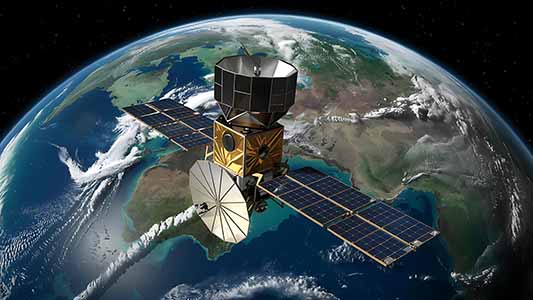
Advances in Satellite Technology & Space Based Research

Faith, Freedom, and Innovation

Leading the creative direction, Erika Kirk emphasized that the performance isn’t just about spectacle — it’s about values.
“This show is about faith, freedom, and innovation — live on the world’s biggest stage,” she said in an interview. “We want to remind people what America stands for: resilience, creativity, and unity.”

Kirk, known for her work in both creative media and advocacy, is said to be curating a diverse mix of artists and storytellers to embody that message. Sources close to the production hint at surprise guest appearances from major music icons, as well as a few unexpected collaborations between traditional performers and AI-generated “digital artists.”

Elon Musk Echoes Call to 'Go to Church,' Sparking Conversations on Faith

A New Era of Live Performance

If successful, the Musk–Kirk partnership could usher in a new era for live events — one where technology not only enhances but transforms the audience experience. Entertainment analysts are already calling it a potential “cultural watershed moment,” comparable to when Michael Jackson redefined the halftime format in 1993 or when Beyoncé set new standards for precision and empowerment on stage.

“Live entertainment has always evolved with technology,” said media analyst Jordan Hayes. “From radio to television to livestreaming — each shift changed how we connect with art and each other. What Musk and Kirk are attempting could be the next quantum leap.”

Global Reach Through Starlink

A key component of the project is Starlink, Musk’s satellite internet network, which provides high-speed connectivity even in remote regions. For the first time, fans in areas traditionally cut off from major broadcast infrastructure may be able to experience the halftime show in real-time, high-fidelity 3D holographic projection, using compatible devices or public viewing hubs.

“Imagine a kid in rural Africa, a family in Alaska, or a festival crowd in Tokyo — all seeing the same live hologram performance as if they were inside the stadium,” one engineer involved in the project said anonymously. “That’s the vision.”

Skepticism and Anticipation

Despite the excitement, not everyone is convinced. Critics have raised questions about feasibility, costs, and whether advanced tech might overshadow the music itself. Some worry that AI-driven elements could dilute the authenticity that makes live performance so powerful.

Still, anticipation remains sky-high. Social media has exploded with speculation about which artists might join the show, and whether Musk himself might make an appearance — perhaps even virtually.

“Love him or not, Musk has a track record of turning impossible ideas into reality,” Hayes added. “If anyone could make the world’s first holographic halftime show happen, it’s him.”

A Moment to Watch

As the countdown to the Super Bowl begins, the Musk–Kirk collaboration stands as one of the most ambitious entertainment experiments in history. Whether it becomes a triumph of vision or a high-tech misfire, one thing is certain — millions will be watching.

“The world is about to see what happens when innovation meets imagination,” Kirk said. “And it’s going to be unforgettable.”
 

Related articles

Elon Musk Gets Thrown Out of a Luxury Hotel… So He Buys the Whole Building

What began as a tense, somewhat bizarre confrontation in the marble lobby of one of the city’s most prestigious hotels quickly escalated into the kind of headline…

ELON MUSK SHAKES THE WORLD AGAIN: A NEW MARS EXPLORATION PROJECT SET FOR EARLY 2026 — HIS DREAM OF CONQUERING THE RED PLANET IS ACCELERATING

In early 2026, the tech billionaire is expected to unveil a brand-new Mars exploration project, signaling a dramatic acceleration in his long-standing ambition to reach — and ultimately…

THE PROMISE HE NEVER KNEW HE’D MAKE Elon Musk’s Emotional Moment With His 85-Year-Old Former Nanny Breaks the Internet..

Elon Musk’s Emotional Moment With His 85-Year-Old Former Nanny Breaks the Internet For a man who has launched rockets into space, built cars that drive themselves, and…

Elon Musk Rocks Global Tech Industry: Tesla Pi Phone 2026 Launches With 17 Shocking Features That Could Finally Kill the iPhone!

Elon Musk shocks the tech world again with the Tesla Pi Phone 2026 — solar-powered, Starlink-connected, and rumored to sync with Neuralink. It’s finally happening — Elon…

Elon Musk’s $7,999 Tesla Tiny Home Just HIT the Market — Free Land, Zero Taxes & Solar Power for Life!

In a move that is already sending shockwaves across the housing, energy, and automotive sectors, Tesla CEO Elon Musk has unveiled what he calls “the most disruptive…

Tesla Pi Phone 2026: Elon Musk Just Changed EVERYTHING — The Next Big Tech Revolution Is HERE! Tesla Pi Phone 2026: Elon Musk Just Changed EVERYTHING — The Next Big Tech Revolution Is HERE! Elon Musk has officially unveiled the Tesla Pi Phone 2026, and the tech world hasn’t slept since. What was supposed to be a simple product presentation became a global earthquake — a moment experts now call “the beginning of the post-smartphone era.” For years, the Pi Phone was nothing more than a rumor whispered in tech circles. A myth. A meme. An impossible dream. But Musk proved once again that the impossible is simply another Tuesday for Tesla. Standing on stage with the black, prism-edged device glowing in his hand, he looked into the camera and said six words that broke the internet: Discover more Smart TV Telephone Smartphone Pi Phone Phone iPhone Mobile phone Best smartphone smartphone phone “This isn’t a phone. It’s evolution.” From that moment on, the digital world flipped upside down. The Tesla Pi Phone 2026 is not just a competitor — it’s a threat. A disruptor. A declaration of war against Apple, Samsung, Google, and every tech giant that thought the smartphone era had peaked. Musk didn’t just introduce a device… he introduced a future. What makes this phone so explosive? Everything. Absolutely everything. Discover more Smart TV phone Telephone Phone iPhone Mobile phone Pi Phone Best smartphone smartphone Smartphone And this is the full story. From the outside, the Pi Phone seems almost alien — a slab of titanium-fused glass that shifts colors under sunlight, absorbing and storing solar energy through microscopic photovoltaic layers. Gone are the ports. Gone are the buttons. Gone is the old idea of what a smartphone should be. The device responds to gestures, proximity, voice, brain-linked commands, and even environmental changes. But the design is just the beginning. What truly turned the tech world upside down was Musk’s announcement that the Pi Phone connects directly to Starlink, the global satellite network capable of providing high-speed internet — not just everywhere on Earth, but beyond it. Musk smiled as he said, “If you can see the sky, you can use your phone.” For billions of people in rural areas, developing nations, disaster zones, or places where infrastructure fails, this wasn’t a feature — it was liberation. No more weak signals. No more dead zones. No more overpriced carriers. No more dependence on local towers. With one sentence, Musk essentially declared the end of traditional telecom monopolies. But Starlink was still only the second biggest bombshell. The true revolution came with NeuralNet Integration, a lightweight interface inspired by the earliest stages of Neuralink. No brain chips — not yet — but sensors that adapt to your patterns so precisely that the phone feels alive. It can predict needs, routines, preferences, even moods. It learns not what you do, but why you do it. Tesla calls it Adaptive Intent AI, and the early reactions have been wild. Testers claim the Pi Phone can draft messages before you type them, adjust screen brightness based on your emotional patterns, or even warn you about stress, danger, or exhaustion before you feel it. One reviewer said, “It feels like the phone understands me.” Another wrote, “It responds like it knows what I’m thinking.” This terrified some people. It thrilled others. But no one could deny: this was new territory. And then came the solar charging reveal — a feature many believed impossible. With Tesla’s SolarSkin layers embedded directly into the titanium frame, the Pi Phone can recharge itself in sunlight and even low-intensity indoor light. Not fully, but significantly. Enough to keep the device alive for days, not hours. Enough to break the cycle of panic-charging and battery anxiety that has dominated smartphone culture for over a decade. And just when everyone thought the shocks were over, Musk announced the final feature: Quantum-Shift Memory Architecture, allowing the device to store, compress, and retrieve data at speeds unheard of in traditional silicon-based systems. This isn’t just fast — it’s evolutionary. Engineers said the Pi Phone loads apps as if they were already open. Videos render instantly. Files transfer in a blink. Gaming feels as if the graphics are streaming directly into your mind. Apple engineers reportedly refused to comment. Samsung quietly postponed two product launches. Google executives held an emergency meeting at midnight. That’s how disruptive this device is. But the question that lit up the internet was simple: Will this destroy the iPhone? Tech analysts didn’t hesitate. Many said yes. While the iPhone 17 struggles with scratch-prone aluminum and iterative upgrades, the Pi Phone is rewriting the entire definition of a smartphone. It doesn’t rely on carriers, chargers, or standard processing infrastructure. It jumps ahead, not by two years — but by a decade. Fans immediately called it “the iPhone endgame.” Stock market analysts warned of “a serious shift in global tech dynamics.” Social media exploded with side-by-side comparisons that overwhelmingly favored Tesla. And the pre-order numbers? Unprecedented. Tesla’s website briefly crashed. Retailers couldn’t handle the flood of reservations. Influencers posted videos titled “GOODBYE APPLE” and “THIS IS THE FUTURE.” But despite all the hype, there is something else — something deeper — happening behind the scenes. This phone is not just a product. It’s part of a larger vision. A Tesla ecosystem that connects cars, homes, solar energy, satellites, and now your personal device. In Musk’s words: “The Pi Phone isn’t the center of your digital life — it’s the bridge.” A bridge between humans and AI. Between Earth and space. Between the digital world and the physical world. Between what technology is… and what it could become. This is why experts say the Pi Phone could replace Wi-Fi entirely. Why developers claim it may surpass laptops within two years. Why futurists warn that we are entering a new era — an era where the phone in your pocket might eventually communicate with your car, your home, or even your neural patterns. For critics, it’s too much power in the hands of one company. For fans, it’s the dream of the century. For Apple, Samsung, and Google… it’s a nightmare. The Pi Phone is not just a challenge — it’s a direct threat to the foundations of their business models. And for the first time in years, the smartphone market finally feels alive again — unpredictable, electric, charged with possibility. As Musk ended the keynote, lights dimmed, music lowered, and he looked at the crowd with a smirk that said he knew exactly what he had unleashed. “The future isn’t coming,” he said. “It’s already in your hands.” And with that, the revolution began. Tesla’s Smart TV 2025: Elon Musk’s Vision Just Changed How We Watch Everything From AI-Driven Content to SpaceX Streaming—This TV Does Way More Than Netflix and Chill SKK By Shahjahan Kabir KhanPublished 6 months ago • 3 min read The Next Big Screen Revolution When you hear “Tesla,” you probably think about sleek electric cars or rocket launches with SpaceX. But in 2025, the company is turning heads in a very different direction: your living room. Elon Musk has officially unveiled the Tesla Smart TV 2025, and it’s not just another screen on your wall—it’s an intelligent, immersive, AI-powered entertainment ecosystem that may well be smarter than your phone. Gone are the days when a TV was just a passive device to binge-watch series or catch up on news. Tesla’s new release is trying to redefine what we expect from home entertainment. But is it innovation or just another Musk marketing flex? Let’s dive into the features, the experience, and why people can’t stop talking about it. A Display from Another Planet—Literally Tesla’s Smart TV doesn’t just boast 8K resolution—it claims to adapt to your eyesight in real-time. Built with what the company calls “OptiAdapt Neural Vision,” the screen adjusts its brightness, contrast, and color temperature based on your eye fatigue levels, room lighting, and even time of day. Think of it as eye care with Elon’s twist. The TV’s sleek, borderless design is said to be inspired by SpaceX tech, and the material used in the frame is reportedly similar to the thermal shielding on their Starships. Why? No idea. But it looks cool, and apparently, it’s fingerprint-proof. Meet “Eve”—The AI That Knows Your Taste Better Than You Do The true magic of the Tesla Smart TV 2025 lies not in its hardware but in its built-in AI assistant, Eve. If you’ve used Siri, Alexa, or even Tesla’s voice system in its cars, forget all that. Eve goes far beyond. Imagine walking into your home and Eve saying, “Hey, I noticed you were watching a crime thriller in the car yesterday. Want to continue from where you left off?” Eve syncs with your Tesla vehicle, your Pi tablet (if you own one), and even your Spotify and YouTube histories. Eve doesn’t just recommend shows—it curates full viewing experiences. Say, “I’m feeling nostalgic,” and Eve dims the lights, queues up classic sitcoms, and even adjusts the room temperature if connected to a Tesla HVAC system. Creepy? Maybe. Convenient? Absolutely. Streaming? That’s So Last Year. Tesla’s Smart TV isn’t just integrating Netflix, Hulu, or Prime. It’s launching its own TeslaVision content network with exclusive programming. Think SpaceX missions streamed live in 12K, behind-the-scenes footage from Elon’s ventures, and real-time interactive content powered by Starlink. And here’s the kicker: if you’re subscribed to Tesla’s premium plan, your TV acts like a holographic portal to virtual events. Yes, you read that right—some users claim early test versions can project volumetric video for concerts or interactive shows. While it’s still under development, it’s enough to stir up Apple and Meta. Gaming Like Never Before Elon Musk has never been one to ignore the gaming community. With Tesla Arc, the Smart TV can stream cloud-based games in ultra-low latency. It’s compatible with most gaming consoles but also comes with a Tesla-designed controller and its own OS tailored for immersive cloud gaming. The AI-enhanced mode adjusts difficulty levels dynamically, responds to your voice commands mid-game, and even gives live tips when it sees you’re struggling. Call it next-level help or next-level spying—depending on your level of paranoia. Privacy Concerns? You Bet. With great technology comes… well, a lot of questions. Eve’s ability to learn, predict, and connect across devices raises significant concerns about data privacy. Musk has assured that everything is encrypted and user-controlled, but let’s be honest—tech that watches you watching it will always have its skeptics. Still, Tesla’s stance is that Eve is the most private AI yet, with offline modes, “No-Listen Zones,” and customizable data permissions. Whether that’s true or just clever branding remains to be seen. The Verdict: Innovation or Infatuation? The Tesla Smart TV 2025 is undeniably exciting. It combines design, AI, and connectivity in ways that feel futuristic—but not entirely impossible. For tech lovers, early adopters, and Musk enthusiasts, it might be a dream come true. For casual viewers? Maybe it’s a bit too much. Yet, as is often the case with Tesla, it’s not about the product alone—it’s about pushing the envelope. Whether this Smart TV becomes the new normal or a luxurious niche device, one thing’s for sure: Elon Musk is turning the living room into his next frontier.

 Tesla Pi Phone 2026: Elon Musk Just Changed EVERYTHING — The Next Big Tech Revolution Is HERE!  Elon Musk has officially unveiled the Tesla Pi Phone 2026,…